
The Science Behind Camouflage
TL;DR
- Deer see in two color channels: blue and yellow. Reds and oranges look muted, closer to gray or brown.
- Blues, whites, and UV-bright fabrics stand out to deer, most of all at dawn and dusk.
- Deer eyes are built for motion, not detail. Breaking up your outline matters more than matching bark.
- Large blocks of light and dark hide you better at distance than fine leaf detail.
- Sitting still is concealment. No pattern hides a hunter who moves at the wrong time.
The science behind camouflage comes down to one fact. Deer do not see the world the way you do.
A lot of camo is built to look convincing to the person buying it. The deer is the one you need to fool. Here is what whitetail vision research says about color, pattern, and movement, and how to set up your gear around it.
What can deer see?
Deer see mostly blues and yellows. People have three types of color-sensing cones. Deer have two.
That gap shifts what stands out in the woods. Deer also lack a UV filter in their eyes, so they pick up ultraviolet light you cannot see.
|
Color |
How a deer likely sees it |
Field note |
|---|---|---|
|
Blue (jeans, rain shells) |
Stands out |
Leave it home |
|
White and UV-bright fabric |
Stands out, most at dawn and dusk |
Skip white patches unless you hunt snow. Wash gear in UV-free detergent. |
|
Red and orange |
Muted, gray to brown |
Blaze orange keeps you visible to hunters, not deer |
|
Red vs. green |
Hard to tell apart |
Contrast and shape matter more than the exact shade |
Why do dawn and dusk matter so much?
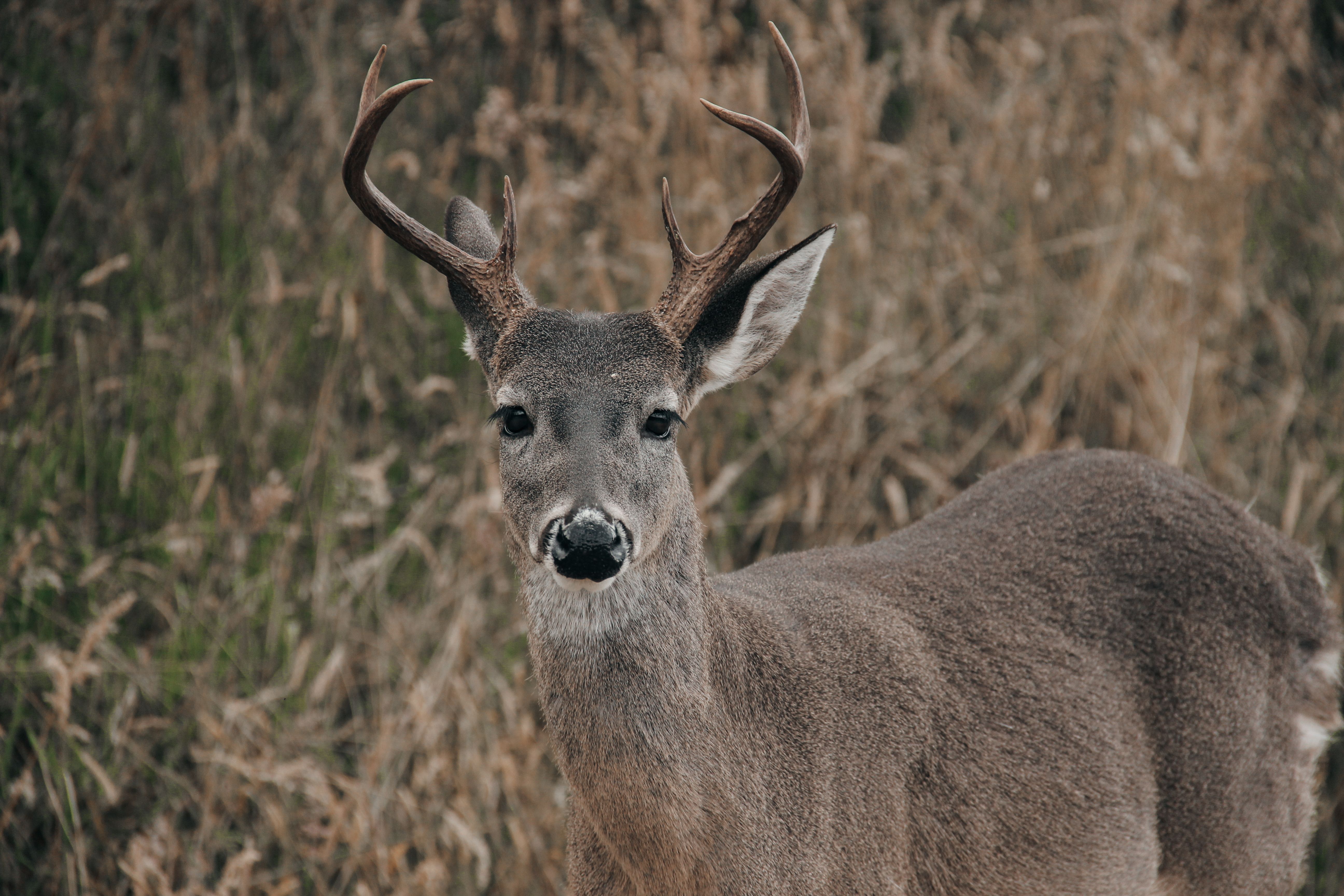
Deer move most in low light, and their eyes are tuned for it. Low-light vision runs up to 20 times better than ours.
Morning and evening light leans toward the blue end of the spectrum. That is the exact range deer see well. Researcher Dr. Karl Miller has noted that a whitetail's flagging tail likely reads as a glowing blue to other deer at dusk.
How wide can a deer see?
A deer sees roughly 300 degrees around it without turning its head. The trade-off is sharpness. Detail at a distance looks soft, while motion registers fast.
Why doesn't blaze orange spook deer?
Deer struggle to separate orange from browns and grays. Blaze orange reads as a muted tone to a deer while staying bright to every hunter in the woods. Your eyes carry three color cones: red, green, and blue. Deer carry two, tuned to blue and yellow, with very few cones that respond to long wavelengths like red and orange. With no red-sensitive cone to light up, orange lands as a dull brown or gray.
Wear it where your state requires it. Rules on how much and when vary, so check your state's hunting regulations before opening day.
What about ducks?
Ducks actually have 4 color vision cones so they are able blaze orange just fine. It's generally not required to wear while hunting waterfowl. Browns, greys, and darker tones are recommended along with having consistent camo across all your clothing and gear.
How does camouflage hide a hunter from deer?
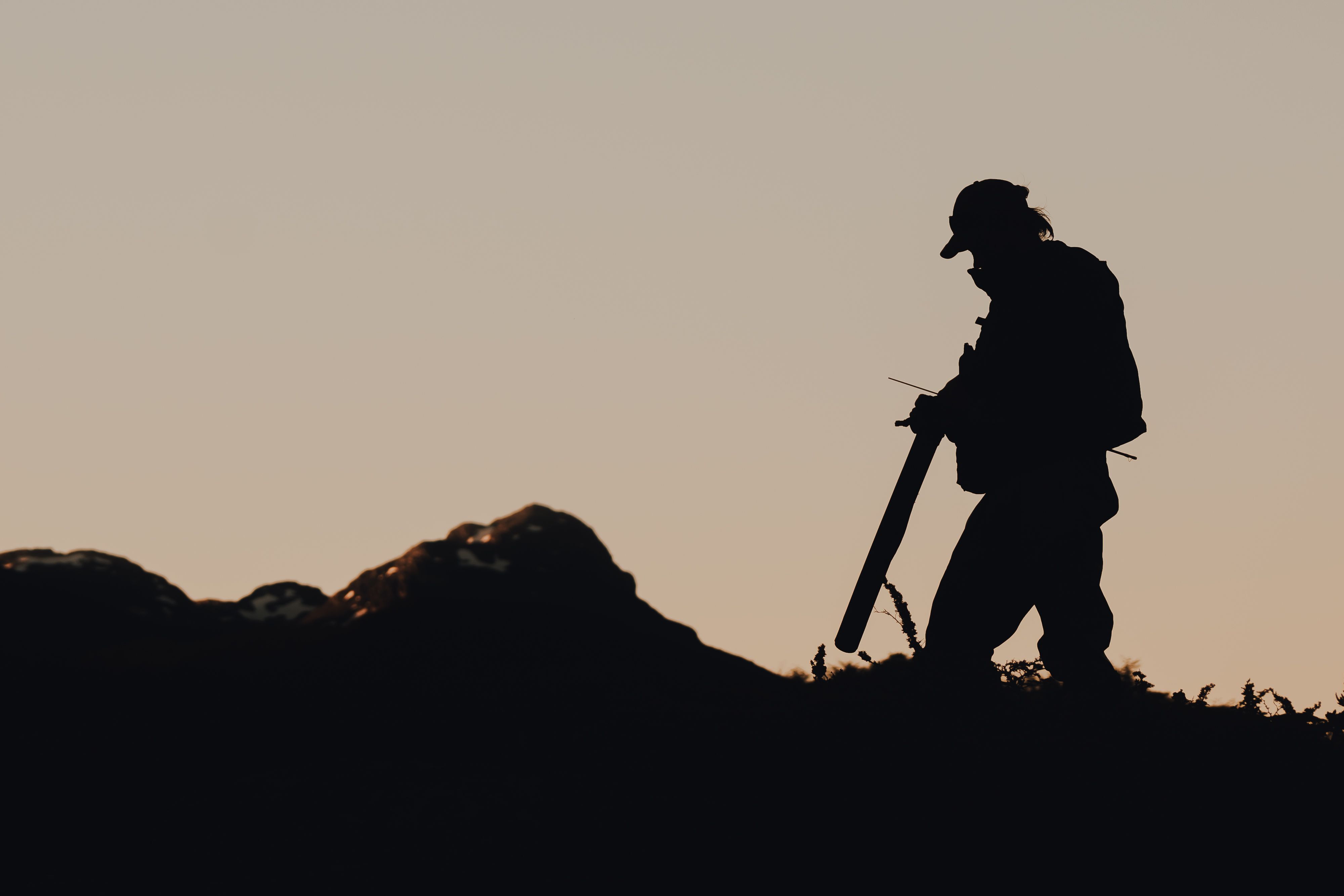
Camo works by breaking up your outline. A deer that cannot read your shape as a person has no reason to leave.
Fine twig-and-leaf detail looks sharp up close. At 20 yards, a deer's soft focus blends it into one solid blob. A blob shaped like a person is what gets you busted.
Large blocks of contrasting light and dark hold up at distance. Some modern patterns layer small detail inside those big shapes. The idea comes from predators: stripes break up a body on the move, and spots blend into the background at rest.
How do you test a camo pattern?
Use the squint test. Hang your jacket or stand 10 to 20 yards from a partner. Squint until the scene goes fuzzy.
- Pass: you still see distinct light and dark shapes.
- Fail: the pattern melts into one flat color.
Does 3D camo help?
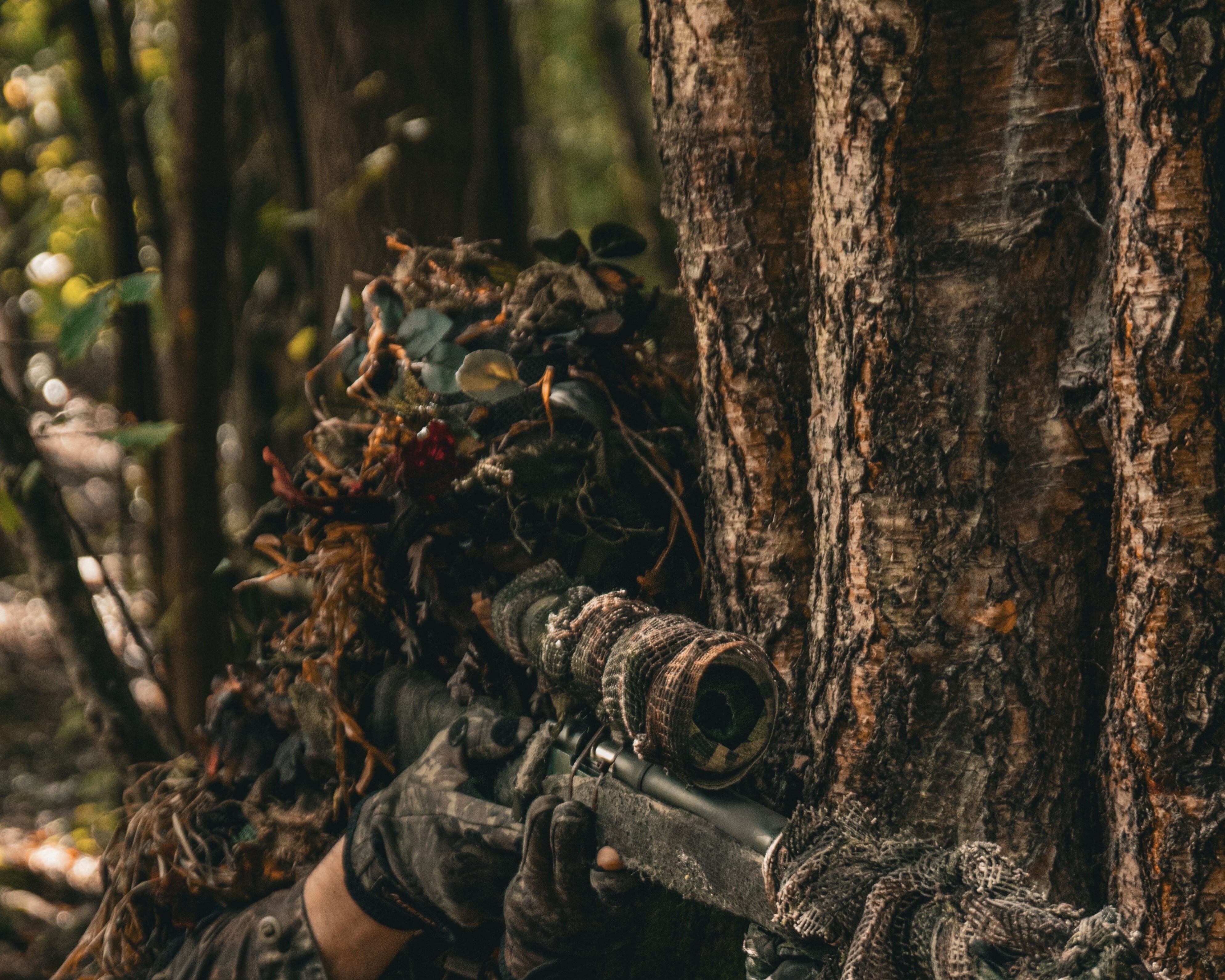
Yes, in the right spot. Leafy suits and ghillie suits add real depth that flat printed fabric cannot. They earn their keep on the ground, where deer see you at eye level.
Why does movement give you away faster than color?
Deer process motion faster than people do. Research from the University of Georgia Deer Lab found deer handle visual information up to four times faster than humans, and the edge is sharpest at sunrise and sunset.
To a deer, a quick hand movement plays out in slow motion. That is why a perfect pattern still fails on a fidgety hunter.
- Time your moves. Shift when the deer's head is down or behind cover.
- Use the wind. When branches sway, your movement blends in. On a windy day, a hunter frozen stiff can stand out too.
- Sit still in calm air. It is old advice, and the research backs it.
What are some main types of camo patterns?
Hunting camo falls into four broad families. Each one tried to solve the same problem with the tools of its time.
|
Pattern |
How it works |
Where it fits |
|---|---|---|
|
Brushstroke / woodland |
Earth-tone splotches of green and brown. Breaks up silhouettes. |
General woods use. |
|
Natural & Mimetic Patterns |
Photo-real bark, leaves, and branches |
Convincing up close. Detail can blur together at distance. |
|
Digital / pixelated |
Pixel blocks built to blend, not to copy plants. |
Mixed terrain |
|
Science-based |
Designed around animal vision, with large shapes plus small detail |
Matched to a specific terrain and species |
Camo patterns as we know today originated from military use in World War I and soon after hunters began buying army surplus. Hunter-specific patterns started to be created in the 1970s, first aimed at whitetail bowhunters.
How do you choose camo for where you hunt?
Match the backdrop the deer sees you against.
- Treestand, leaves down: you sit against sky and bare limbs. Go lighter with bold contrast.
- Early season, full green canopy: darker, greener tones blend into shade.
- Ground blind or stalking in brush: match grass, brush, and shadow. Consider 3D.
- Open or rocky country: shots run past 50 yards. Large neutral blocks beat fine detail.
- Snow: white only works when the whole backdrop is white. Consider a mix of white with mimicry
Before the season, have a partner photograph you from where deer usually approach. The photo shows you what the deer sees, not what the tag on the jacket promised. Concealment pattern is far more important than only matching the color of foilage.
How can Paracord help you on your next Hunt?
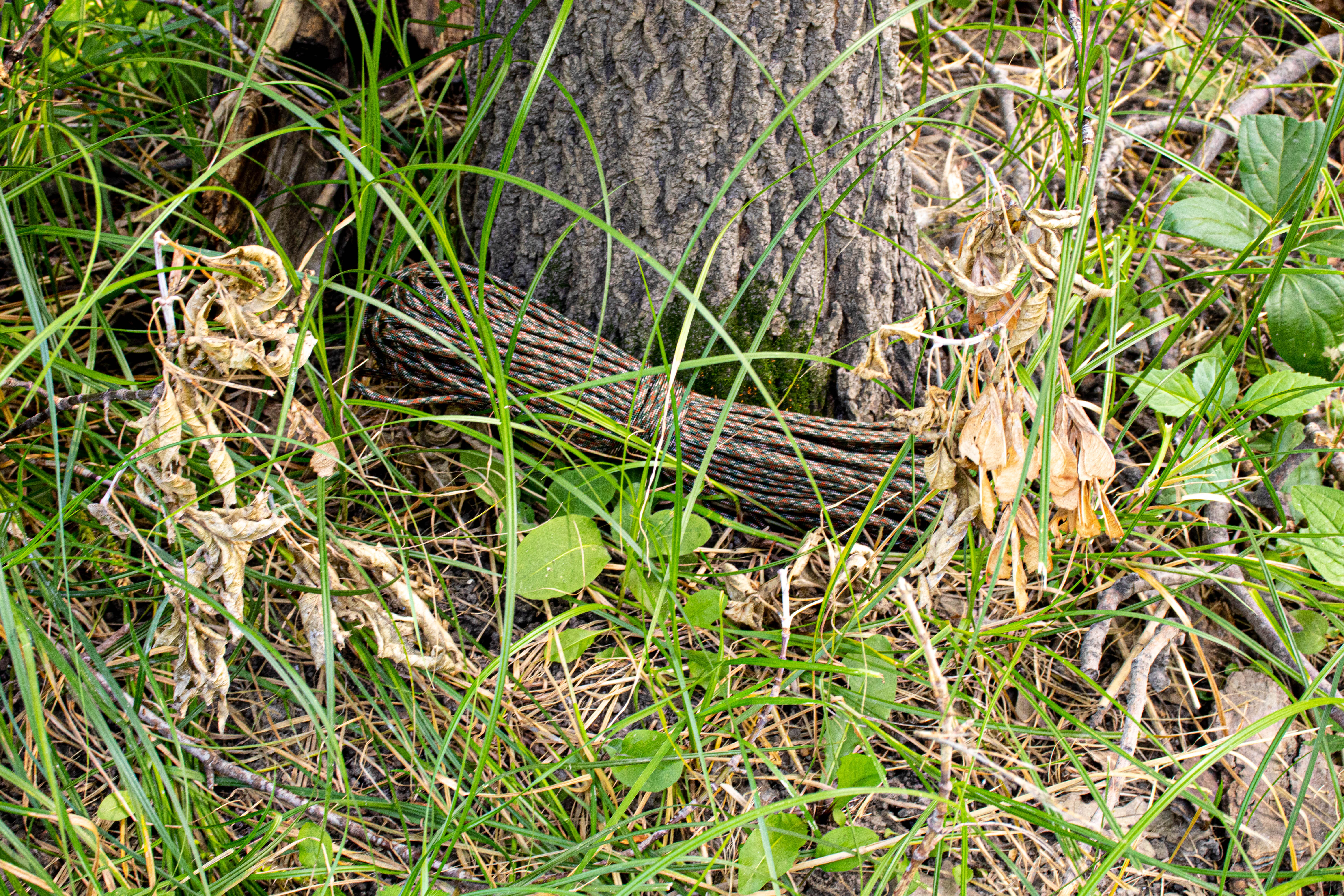
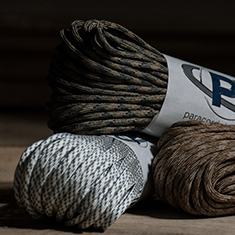
Use camo cord anywhere a bright line or shiny hardware would break your concealment. That means the stand, the blind, and the gear you carry in.
- Haul line: raise your bow or unloaded firearm into the stand with camo paracord.
- Shooting lanes: tie back limbs instead of cutting them if needed.
- Blind setup: lash cut brush to a ground blind, or secure panels with camo shock cord.
- Stand organization: hang your pack, calls, and rangefinder within reach.
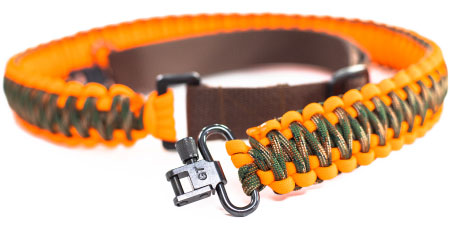
- Handle wraps and slings: build your own from camo paracord kits.
- Low-shine hardware: bright metal can flash in the sun. Swap in camo buckles and hardware.
When you need to stand out bright orange is easy for you to spot in leaf litter and gray low light.
Neon Orange 550 Paracord specs:
- Type III, 550 lb tensile strength
- 7 inner strands, 4mm diameter
- Made in the USA
Put it to work as:
- Trail markers: tie short tags on branches along your route to the stand.
- Recovery markers: flag the last blood sign or where a deer went down.
- Drag line: a bright drag rope is easy to find after dark.
- Gear pulls: add tabs to zippers and bags so you can find them with gloves on.
Gear up for the stand
Beyond camo, you'll want dependable gear for your stand.
- Shop the Paracord Planet Camo Collection for cord, shock cord, hardware, and kits.
- Grab high-vis orange 550 cord for markers you can find at first light.
- Craft your own Paracord Sling for a comfortable and rugged piece of gear.
- Read more field projects on the Paracord Planet blog.
Sources & Further Reading
- https://en.wikipedia.org/wiki/Military_camouflage
- https://www.boone-crockett.org/plaid-good-camo
- https://www.camopedia.org/index.php/Brushstroke
- https://deerassociation.com/hunters-guide-deer-vision
- https://deerassociation.com/facts-about-deer-vision/
- https://www.academy.com/expert-advice/hunting/types-of-camo#Best-camo-patterns-in-2022
- https://www.themeateater.com/hunt/waterfowl/the-truth-about-duck-vision